
GTA Buyer Guide
Basement Renovation & Finishing Cost GTA: Real Toronto Budget Guide
Basement renovation cost Toronto projects can range from $30K to $150K+ depending on moisture, layout, legal suite scope, and hidden system risk. Use this guide to make the right decision before you commit.
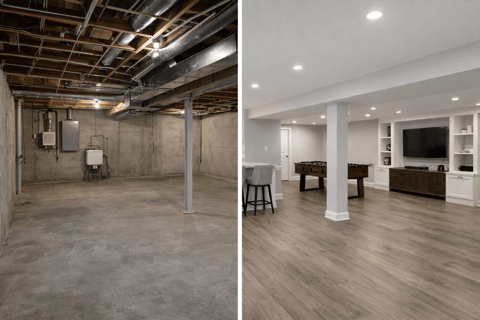
Basement Renovation Cost Toronto & GTA: Real Budget Guide
Basement renovation cost Toronto projects usually fall into four bands: basic $30K-$45K, mid-range $45K-$75K, high-end $75K-$110K+, and legal suite scope $80K-$150K+. The difficult part is not the visible finish. It is hidden risk: moisture, ceiling constraints, drainage, and compliance work that can change the final number fast.
Why This Matters for Real GTA Buyers
Many buyers treat basement finishing cost Toronto as a cosmetic decision. In practice, basements are often where first-year budget surprises happen. If you underestimate basement risk, it can collide with other upgrades like kitchen work or HVAC replacement and compress cash flow.
Basement Renovation Cost in GTA: Per-Square-Foot and Total Ranges
- Per sq ft: basic $35-$55, mid $55-$75, high $75-$100+, legal suite $90-$140+
- Total: basic $30K-$45K, mid $45K-$75K, high $75K-$110K+, legal suite $80K-$150K+
Key add-on costs (CAD)
- bathroom: $15K-$35K
- kitchen: $15K-$30K
- separate entrance: $10K-$25K
- underpinning basement cost Toronto range: $40K-$100K+
- waterproofing: $5K-$20K
- permits: $500-$3K
Real Story #4: Dry Basement, Outdated Systems, $60K Final Cost
A Toronto owner started with a dry basement and expected a simple finish. During planning, outdated electrical, ventilation limitations, and code updates expanded the scope. Final cost landed near $60K. The basement was dry, but systems were not ready for the intended use.
Legal Basement Apartment Cost Toronto: When It Makes Sense
Legal basement apartment cost Toronto projects often run $80K-$150K+ because compliance requirements stack: egress, fire separation, ventilation, plumbing, electrical, and entrance strategy. This can make sense when the property supports legal layout and long-term rental strategy.
Airbnb viability (GTA context)
Short-term rental viability depends on municipal rules, property layout, and operating constraints. Do not assume Airbnb income can offset renovation spend unless legal use, access, and compliance are confirmed first.
Basement Inspection: What You Can (and Can't) Detect Before Renovation
What is usually detectable
- visible cracks
- water stains
- musty smell
- uneven floors
- low ceiling constraints
What is not easily detectable
- mold behind drywall
- slow leaks in foundation zones
- poor exterior drainage behavior
- hidden electrical issues
Inspection cost (CAD)
- basic inspection: $300-$600
- specialized moisture/mold review: $500-$1,500
How much it can save
- finding waterproofing risk early can avoid $10K-$30K escalation
- identifying structural risk early can prevent $50K+ decision mistakes
Health and safety
- mold can affect respiratory health
- poor ventilation supports humidity buildup
- illegal wiring increases fire risk
If you're not sure about your basement condition, get a quick inspection review before planning renovation.
Common Mistakes That Inflate Basement Remodel Cost Toronto
- Skipping inspection and assuming visible condition tells the full story.
- Ignoring early moisture signals because the basement looks "mostly dry".
- DIY structural or envelope changes without full sequencing and compliance planning.
Decision Path: Is This Basement Scope Still Worth It?
- Model three ranges: base case, expected case, stress case.
- Add at least 15-20% contingency for hidden conditions.
- Test timing overlap with other first-year costs using ownership cost planning.
- If legal suite path is required, validate compliance feasibility before final offer assumptions.
Timelines (Toronto/GTA Typical)
- basic: 4-6 weeks
- mid: 6-10 weeks
- bathroom-inclusive: 8-12 weeks
- legal suite: 12-16 weeks
- underpinning-heavy: 16-24 weeks
Related Pages for Basement Decision Planning
- Basement renovation cost GTA calculator
- Issue page: unfinished basement decision guide
- Home inspection red flags in GTA
- Roof replacement cost Toronto
- Garage renovation and improvement cost GTA
- Back/front yard upgrades cost GTA
Last updated: 2026. Prices reflect GTA contractor estimates. Estimates only. Real costs depend on structure, permits, and hidden issues.
Where These Numbers Come From
We use Toronto/GTA contractor pricing patterns, local housing-stock observations, and scenario-based maintenance modeling. These are planning ranges only, not fixed quotes.
Confidence Level
Medium confidence. Confidence is lower when scope depends on hidden conditions (for example behind-wall electrical, moisture, or structural corrections) and higher when scope is cosmetic with clear access and stable systems.
What Can Go Wrong
- Hidden moisture, mold, or drainage issues discovered after opening finishes.
- Electrical and plumbing upgrades that expand from partial to full-scope corrections.
- Structural or code-compliance issues that add permit and timeline pressure.
- Contractor sequencing gaps that create avoidable rework and added cost.
When This Estimate Breaks
Rough planning ranges break down when property condition is unknown, prior work is undocumented, or major scope changes happen mid-project. For high-risk properties, use these ranges only as a first-pass budget screen and validate with inspection plus scoped quotes before committing.
Practical reference: use the Toronto renovation cost checklist for a full renovation budget breakdown before you finalize your offer assumptions.
Section 1 - Context
This page solves a buyer-side decision problem: whether this issue should change your offer strategy, first-year budget plan, or property selection in Toronto/GTA.
Section 2 - Cost Range
Use the cost and timing ranges already presented in this guide. Keep the same numbers, then test best/base/worst-case scenarios before committing.
Section 3 - Interpretation
The same number can mean very different risk depending on scope depth. Lower ranges often map to targeted corrective work; upper ranges usually indicate system-level overlap or sequencing friction.
Section 4 - Risk & Variability
- Scope drift after inspection or opening walls.
- Permit/trade dependencies that extend timeline and labor cost.
- Material and contractor availability across GTA seasons.
Section 5 - What Can Go Wrong
- Hidden moisture or drainage issues.
- Electrical/plumbing corrections cascading into finish rework.
- Under-scoped contractor proposals that omit necessary items.
Section 6 - Confidence
Confidence: Medium
Confidence is medium because visible condition and true technical condition often diverge until inspection and scoped validation.
Section 7 - Decision Frame
When this is manageable: Manageable when scope is known, contingency is budgeted, and sequencing is realistic.
When to walk away: Walk away when total correction risk and first-year cash-flow pressure remove the expected deal advantage.
Section 8 - Next Step
Estimate your scenario first - then decide next step.
Planning Notes
Risks
Scope can expand quickly when hidden system conditions differ from visible finishes.
Trade-Offs
Lower initial purchase price may be offset by higher first-year correction spend if risk is under-scoped.
When Not to Do It
Do not proceed when projected correction range plus contingency removes your affordability margin.