
GTA Buyer Guide
Garage Storage Renovation Cost in Toronto (GTA): Real Case + Pricing Breakdown
Practical GTA decision guide for garage storage renovation cost: zoning constraints, wall-by-wall structural renovation, and DIY vs professional risk tradeoffs.
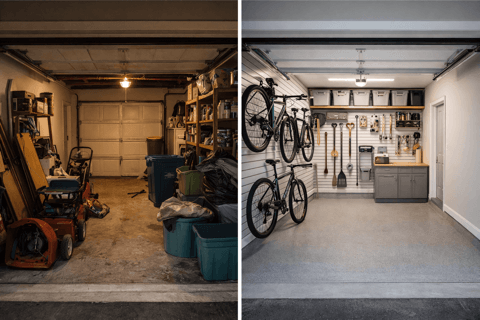
Garage Storage Renovation Cost in Toronto (GTA): Real Case + Pricing Breakdown
Intro
For many older properties, garage storage renovation cost is not just about shelving or a new door. In the GTA, the real decision often starts with structure and zoning constraints, especially when the garage is old, close to the house, and no longer aligned with current setback rules.
This guide breaks down garage storage renovation cost GTA scenarios using a real decision pattern: when full demolition and rebuild are not feasible, and wall-by-wall structural renovation is the only practical path.
When You Cannot Rebuild Your Garage
In Toronto and across the GTA, many detached garages from the 1940s-1960s are effectively grandfathered in place. They may sit closer to lot lines or the main house than current zoning allows.
- Current setback rules can block a like-for-like rebuild.
- Demolition can remove grandfathered protection.
- A new permit may require full compliance that the lot cannot meet.
When this happens, renovation is often the only viable option. The decision is no longer “renovate or rebuild freely”; it is “renovate in place or risk losing the structure entirely.”
Real Garage Renovation Case (Toronto)
Real scenario baseline:
- Detached garage built in the 1950s.
- Structurally aging but still standing.
- Full demolition was not practical due to zoning risk.
- Garage sat too close to the house for straightforward rebuild approval.
- Only workable path: wall-by-wall structural renovation.
Phase 1 — Structural Stabilization
Before opening walls, temporary stabilization was required to control load paths and reduce collapse risk during sequential replacement.
Phase 2 — Wall-by-Wall Replacement
Each wall segment was rebuilt in sequence rather than all at once. This preserved structural continuity while replacing compromised framing and sheathing.
Phase 3 — Roof Rebuild
The roof was fully rebuilt after wall stabilization to avoid placing new roof loads on weak legacy framing.
Phase 4 — Functional Upgrades
New garage door installed, plus a rear exit door to improve backyard access and daily usability.
Garage Renovation Cost Toronto: Core Cost Breakdown
DIY (Not Recommended for Structural Scope)
| Component | Cost |
|---|---|
| Lumber & framing | $3,000-$6,000 |
| Roofing materials | $2,000-$5,000 |
| Door | $800-$2,000 |
| Misc | $1,000-$2,000 |
| Total DIY | $7,000-$15,000 |
Warning: this excludes sequencing errors, structural failure risk, and many correction costs after failed execution.
Professional Renovation
| Component | Cost |
|---|---|
| Structural stabilization | $2,000-$5,000 |
| Wall rebuild | $8,000-$18,000 |
| Roof rebuild | $6,000-$15,000 |
| Garage door install | $2,000-$5,000 |
| Rear exit door | $1,500-$4,000 |
| Permits & inspections | $1,000-$3,000 |
| Total | $20,000-$45,000+ |
In garage storage renovation cost GTA planning, structural scope and roof sequencing are usually the largest cost drivers.
Timeline Comparison
DIY
- 4-12 weeks
- evenings + weekends
- high physical and sequencing burden
Professional
- 1-2 weeks planning/permitting setup
- 2-4 weeks construction
- more predictable scheduling
Risk Factors (YMYL)
- structural collapse during wall replacement
- improper load distribution and roof transfer issues
- permit violations and failed inspection outcomes
- hidden rot, base plate damage, or localized foundation defects
DIY vs Professional
| Factor | DIY | Professional |
|---|---|---|
| Cost | lower | higher |
| Risk | VERY HIGH | controlled |
| Timeline | unpredictable | structured |
| Quality | inconsistent | stable |
In practice, DIY makes sense mainly for non-structural upgrades. For structural aging garages, professional execution is typically the safer path.
Garage Storage Renovation Cost Breakdown
- wall-mounted systems: $500-$2,000
- overhead racks: $300-$1,500
- insulation + drywall: $2,000-$6,000
- electrical upgrades: $1,000-$3,000
Garage storage renovation cost is often underestimated because storage systems depend on structural reliability. If walls or roof are unstable, storage upgrades should wait until core structure is secured.
Should You Renovate or Rebuild Your Garage?
- If structure is legal but non-compliant under current setbacks → prioritize in-place renovation.
- If permit-compliant rebuild is realistically possible → compare full rebuild cost and long-term utility.
- If structural integrity is failing → professional structural path only.
Related Planning Links
- Back/front yard upgrades and water/drainage problems
- Renovation cost guide for Toronto & GTA
- Garage improvement calculator
- General renovation and repairs calculator
- Toronto renovation cost checklist
FAQ
What is garage storage renovation cost in GTA?
Garage storage renovation cost GTA projects can range from a few hundred dollars for simple rack systems to several thousand when insulation, drywall, and electrical upgrades are included. If structural work is required first, total project cost is much higher.
Can I rebuild my garage in Toronto?
It depends on zoning, setbacks, and permit constraints. Some older garages are grandfathered, and demolition can remove that protection, making a like-for-like rebuild difficult or impossible.
Is garage renovation cheaper than rebuilding?
Often yes when zoning limits rebuild options and structure can be stabilized. But the right comparison depends on compliance risk, structural condition, and long-term use goals.
Is DIY garage rebuild safe?
For structural scope, usually not. Load-bearing sequencing, roof transfer, and collapse risk make professional execution the safer approach.
Conclusion
The right garage storage renovation cost decision is usually about risk control, not just lowest price. In GTA conditions, if structure is aging and rebuild permits are uncertain, phased professional renovation often provides the best balance of safety, compliance, and usable storage outcomes.
Costs are estimates based on GTA market conditions and real renovation scenarios. For project-critical decisions, validate scope and sequencing with licensed contractors and permit-aware professionals before committing.
Where These Numbers Come From
We use Toronto/GTA contractor pricing patterns, local housing-stock observations, and scenario-based maintenance modeling. These are planning ranges only, not fixed quotes.
Confidence Level
Medium confidence. Confidence is lower when scope depends on hidden conditions (for example behind-wall electrical, moisture, or structural corrections) and higher when scope is cosmetic with clear access and stable systems.
What Can Go Wrong
- Hidden moisture, mold, or drainage issues discovered after opening finishes.
- Electrical and plumbing upgrades that expand from partial to full-scope corrections.
- Structural or code-compliance issues that add permit and timeline pressure.
- Contractor sequencing gaps that create avoidable rework and added cost.
When This Estimate Breaks
Rough planning ranges break down when property condition is unknown, prior work is undocumented, or major scope changes happen mid-project. For high-risk properties, use these ranges only as a first-pass budget screen and validate with inspection plus scoped quotes before committing.
Practical reference: use the Toronto renovation cost checklist for a full renovation budget breakdown before you finalize your offer assumptions.
Section 1 - Context
This page solves a buyer-side decision problem: whether this issue should change your offer strategy, first-year budget plan, or property selection in Toronto/GTA.
Section 2 - Cost Range
Use the cost and timing ranges already presented in this guide. Keep the same numbers, then test best/base/worst-case scenarios before committing.
Section 3 - Interpretation
The same number can mean very different risk depending on scope depth. Lower ranges often map to targeted corrective work; upper ranges usually indicate system-level overlap or sequencing friction.
Section 4 - Risk & Variability
- Scope drift after inspection or opening walls.
- Permit/trade dependencies that extend timeline and labor cost.
- Material and contractor availability across GTA seasons.
Section 5 - What Can Go Wrong
- Hidden moisture or drainage issues.
- Electrical/plumbing corrections cascading into finish rework.
- Under-scoped contractor proposals that omit necessary items.
Section 6 - Confidence
Confidence: Medium
Confidence is medium because visible condition and true technical condition often diverge until inspection and scoped validation.
Section 7 - Decision Frame
When this is manageable: Manageable when scope is known, contingency is budgeted, and sequencing is realistic.
When to walk away: Walk away when total correction risk and first-year cash-flow pressure remove the expected deal advantage.
Section 8 - Next Step
Estimate your scenario first - then decide next step.
Planning Notes
Risks
Scope can expand quickly when hidden system conditions differ from visible finishes.
Trade-Offs
Lower initial purchase price may be offset by higher first-year correction spend if risk is under-scoped.
When Not to Do It
Do not proceed when projected correction range plus contingency removes your affordability margin.