
Before
Dated cabinets/finishes make the whole home feel older.
GTA Home Potential
A practical before/after view: what feels risky, what usually fixes it, and what outcome buyers can realistically expect.
An outdated kitchen in Toronto is usually not the real problem by itself. The visible finishes often look worse than the true decision risk.
The bigger factor is hidden scope: layout constraints, electrical capacity, plumbing paths, ventilation limits, and behind-wall conditions that only become clear during deeper review.
As planning anchors, many kitchens fall in a light refresh range of about $8k-$30k, while structural/layout-heavy projects can move into the $50k-$120k+ band.
The core decision is whether that hidden scope can fit your first-year budget without breaking your cash-flow plan after closing.
Cosmetic ($8k-$22k)
→ surfaces only
Mid-scope ($22k-$55k)
→ cabinets + partial upgrades
Full ($55k-$120k+)
→ layout + systems
These ranges are scope-based GTA planning bands, not one-price averages. They reflect typical labor/material behavior and include contingency logic (usually 10-20%) for hidden conditions.
Optional: validate your estimate with a contractor.
You may be connected with 1-3 providers. You are not obligated to proceed.
Continue with: kitchen calculator, renovation checklist, and fixer-upper guide.
Last updated: April 28, 2026.
This content is for informational purposes only and is not financial or legal advice.
Need a full renovation budget baseline? Use the Toronto renovation cost checklist for a full renovation budget breakdown before you commit.
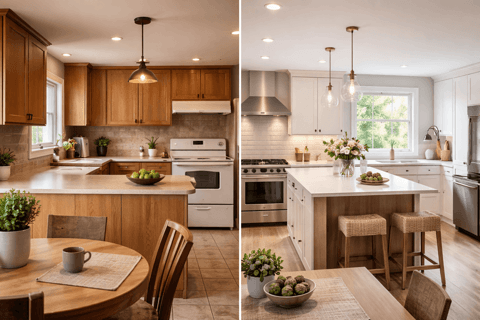
Before
Dated cabinets/finishes make the whole home feel older.
Plan
Phased refresh first, then targeted renovation where it matters.
After
Higher perceived quality without over-renovating.
Estimate your scenario first, then decide your next step.
You may be connected with 1-3 providers. You are not obligated to proceed.