
GTA Buyer Guide
Courtyard Renovation Cost Toronto (Back/Front Yard Decision Guide)
Decision engine for courtyard renovation cost Toronto: drainage-first logic, DIY vs contractor ranges, and next-step pathways.
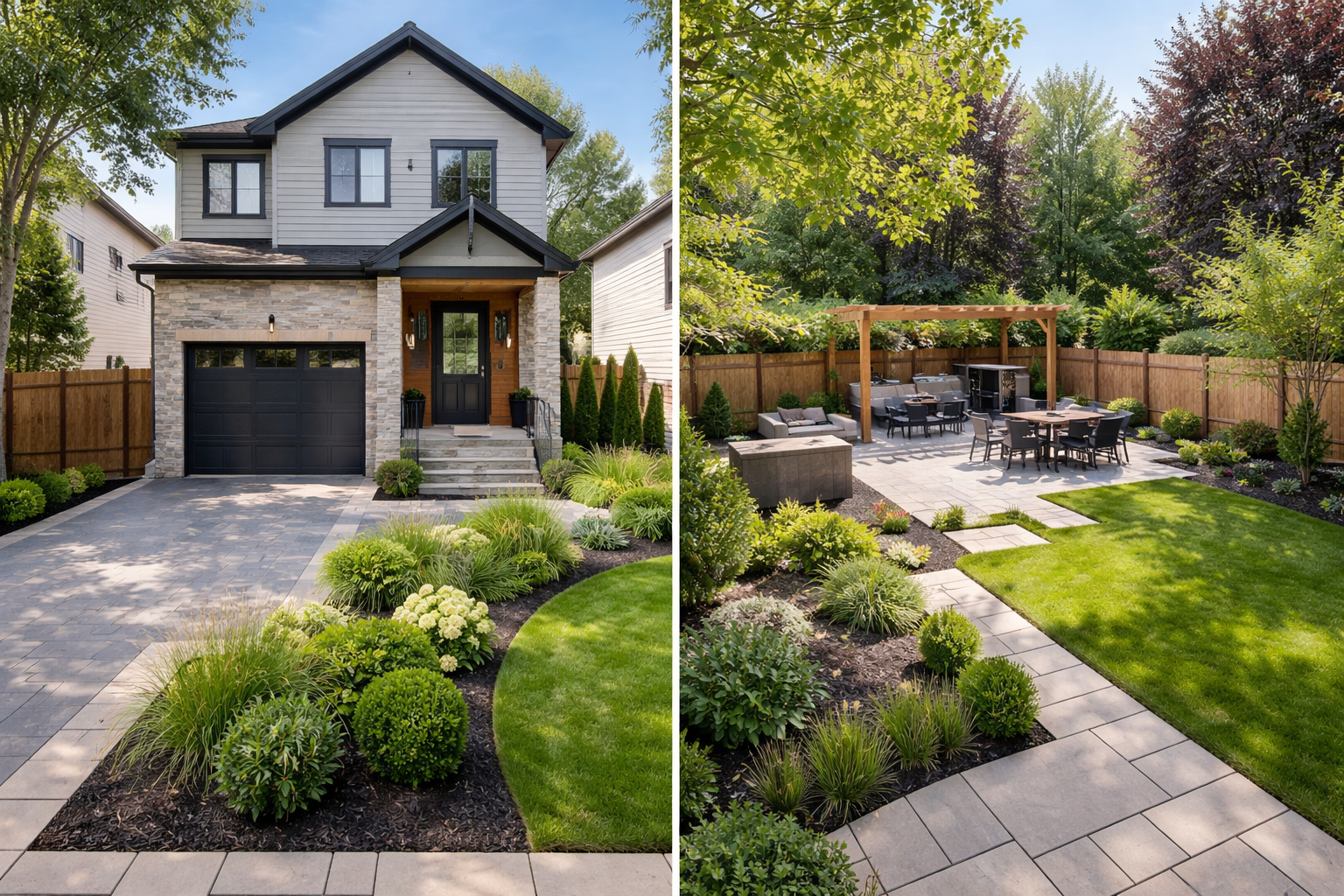
Courtyard Renovation Cost Toronto: Backyard Upgrade Decision Guide (2026)
In Toronto/GTA, courtyard renovation cost can range from controlled functional upgrades to full-scope rebuilds. The right first step is not design style — it is identifying whether water and grading risk are already driving hidden scope.
For most buyers and owners, the practical sequence is: fix drainage first, stabilize usability second, and add decorative layers last.
User state context
This step is for buyers/owners deciding whether a yard project is a simple landscaping update or a risk-control project with infrastructure scope.
You are at step 7 of 8 in the post-purchase decision journey.
Quick Answer
Courtyard renovation cost Toronto decisions are usually won or lost at drainage stage. If standing water and soft ground are present, landscaping-first execution often creates rework and doubles effective cost.
Real Toronto Backyard Case (Drainage Problem)
West-end Toronto case: the backyard looked manageable at first glance, but rain behavior told a different story.
- water pooling after rainfall
- soft, unstable soil zones
- lawn area frequently unusable
- old but usable deck already present
Target outcome was a usable courtyard setup: deck + lawn + storage + gazebo + fire pit. The first critical finding was that drainage had to be solved before any visible upgrade made sense.
Why: once water behavior is wrong, every surface-level improvement (lawn, pavers, structures) carries higher failure and rework risk.
Where Should You Start?
If your backyard has standing water or soft ground after rain: start with drainage.
If ground is stable and drains correctly: start with landscaping/design sequence.
Ignoring drainage can become the largest cost multiplier in courtyard renovation cost Toronto projects because finished work may need partial removal and reinstallation.
Priority + timing
Priority:
- High: water-flow and grading corrections
- Medium: hardscape usability and access improvements
- Optional: decorative planting/lighting
- Waste: premium aesthetics before drainage stability
Timing:
- Immediate (0-3 months): drainage-risk interventions
- Within 1 year: core courtyard usability scope
- Later: design and decorative upgrades
Courtyard Renovation Cost (Toronto Real Example)
DIY Cost (Materials Only)
- French drain: $1,500-$3,000
- Lawn + soil: $1,000-$2,000
- Deck materials: $1,500-$4,000
- Gazebo + storage + fire pit: $2,500-$6,000
Total (DIY materials): $6,500-$15,000
Hiring Contractors
- Drainage: $5,000-$12,000
- Lawn: $3,000-$8,000
- Deck: $7,000-$15,000
- Extras (gazebo/storage/fire pit): $8,000-$18,000
Total (contracted scope): $23,000-$50,000
For backyard renovation cost Toronto planning, drainage is usually the biggest cost multiplier because it drives excavation depth, routing complexity, and sequencing.
DIY vs Hiring Contractors — What Actually Changes?
| Approach | Cost | Time | Quality | Risk |
|---|---|---|---|---|
| DIY | Lowest direct cash cost | Slowest execution | Medium consistency (~70-85%) | Higher error/rework risk |
| Contractors | Highest direct cash cost | Fastest delivery | Higher consistency | Lower execution risk (if scoped well) |
Timeline Comparison
DIY
- 4-6 weeks typical
- evenings + weekends schedule
- physical labor intensity is high
Contractors
- 2-3 weeks typical
- scheduled trade sequencing
- minimal owner involvement beyond decisions
What can go wrong
- drainage discovered late after hardscape install
- root systems and retaining constraints increasing excavation scope
- weather windows shifting schedule and cost
- under-scoped contractor quotes missing disposal/regrade details
Decision shortcut
Yes if:
- drainage or grading affects water behavior and foundation confidence
- you need practical outdoor usability gains with controlled budget
No if:
- scope is mostly visual while higher-priority home risks remain unresolved
- you cannot stage work by risk and sequencing
What Should You Do Next?
Case 1: limited budget + willing to invest time → DIY-first approach with drainage phase at the front.
Case 2: need speed and predictability → contractor-led scope with drainage and grading fully specified.
Case 3: uncertain about water behavior → start with inspection/drainage quote before any design spend.
Decision Framework
- Map rain behavior before design decisions.
- Separate drainage scope from aesthetics in the budget.
- Choose DIY vs contractors based on risk tolerance and schedule reality.
- Proceed only when drainage and grading logic is stable.
FAQ
How much does courtyard renovation cost in Toronto?
Courtyard renovation cost Toronto ranges widely by scope. Materials-only DIY can start near $6,500, while contractor-led multi-component scope often lands around $23,000-$50,000.
Is drainage required before landscaping?
If standing water, soft soil, or repeated pooling exists, yes. Drainage-first sequencing usually prevents rework and protects long-term yard performance.
What is the cheapest way to fix backyard water issues?
The lowest-cost path is usually early diagnosis plus targeted drainage correction before visible upgrades. Delayed drainage correction is commonly more expensive.
Related Planning Links
- Back/front yard upgrade calculator
- Deck cost calculator
- Deck planning guide in GTA
- Renovation costs in Toronto & GTA
- What is actually expensive to fix
- Hidden costs after buying an older home
How I would approach this now
I would classify courtyard renovation cost Toronto decisions as infrastructure-first. If drainage uncertainty exists, I would not approve design-heavy spending until water-control scope is validated and priced.
Optional next step: run the yard calculator, then compare with deck and renovation cost pages before deciding whether to stage DIY work or contract full execution.
Where These Numbers Come From
We use Toronto/GTA contractor pricing patterns, local housing-stock observations, and scenario-based maintenance modeling. These are planning ranges only, not fixed quotes.
Confidence Level
Medium confidence. Confidence is lower when scope depends on hidden conditions (for example behind-wall electrical, moisture, or structural corrections) and higher when scope is cosmetic with clear access and stable systems.
What Can Go Wrong
- Hidden moisture, mold, or drainage issues discovered after opening finishes.
- Electrical and plumbing upgrades that expand from partial to full-scope corrections.
- Structural or code-compliance issues that add permit and timeline pressure.
- Contractor sequencing gaps that create avoidable rework and added cost.
When This Estimate Breaks
Rough planning ranges break down when property condition is unknown, prior work is undocumented, or major scope changes happen mid-project. For high-risk properties, use these ranges only as a first-pass budget screen and validate with inspection plus scoped quotes before committing.
Practical reference: use the Toronto renovation cost checklist for a full renovation budget breakdown before you finalize your offer assumptions.
Section 1 - Context
This page solves a buyer-side decision problem: whether this issue should change your offer strategy, first-year budget plan, or property selection in Toronto/GTA.
Section 2 - Cost Range
Use the cost and timing ranges already presented in this guide. Keep the same numbers, then test best/base/worst-case scenarios before committing.
Section 3 - Interpretation
The same number can mean very different risk depending on scope depth. Lower ranges often map to targeted corrective work; upper ranges usually indicate system-level overlap or sequencing friction.
Section 4 - Risk & Variability
- Scope drift after inspection or opening walls.
- Permit/trade dependencies that extend timeline and labor cost.
- Material and contractor availability across GTA seasons.
Section 5 - What Can Go Wrong
- Hidden moisture or drainage issues.
- Electrical/plumbing corrections cascading into finish rework.
- Under-scoped contractor proposals that omit necessary items.
Section 6 - Confidence
Confidence: Medium
Confidence is medium because visible condition and true technical condition often diverge until inspection and scoped validation.
Section 7 - Decision Frame
When this is manageable: Manageable when scope is known, contingency is budgeted, and sequencing is realistic.
When to walk away: Walk away when total correction risk and first-year cash-flow pressure remove the expected deal advantage.
Section 8 - Next Step
Estimate your scenario first - then decide next step.
Planning Notes
Risks
Scope can expand quickly when hidden system conditions differ from visible finishes.
Trade-Offs
Lower initial purchase price may be offset by higher first-year correction spend if risk is under-scoped.
When Not to Do It
Do not proceed when projected correction range plus contingency removes your affordability margin.