
GTA Buyer Guide
What HVAC System Is Best for Toronto Homes? (2026 Guide)
There is no single best HVAC system for Toronto homes. The right choice depends on house type, existing ductwork, winter performance needs, and your 5–10 year budget strategy.
What HVAC System Is Best for Toronto Homes? (2026 Guide)
There is no universal best HVAC system for Toronto. The right setup depends on your house, budget, comfort goals, and how long you plan to stay. For most GTA buyers, the real decision is not brand-first. It is system fit first, then installer quality.
Why this question came up
This question usually appears after inspection, not before. The house looks good, then you find an older furnace, uneven room temperatures, and high utility history. That is when “best HVAC system Canada” turns into a practical decision about risk, monthly cost, and first-year upgrades.
How HVAC works in Toronto climate
Toronto has cold winters and humid summers. A system that is cheap to install but weak in deep winter can cost more later. A system that is efficient in mild weather may still need backup heat when temperatures drop hard. That is why furnace vs heat pump Canada decisions are rarely one-size-fits-all.
Main HVAC types in Toronto/GTA
| System type | Typical GTA installed cost (CAD) | Where it usually fits | Main trade-off |
|---|---|---|---|
| Furnace | $3,500-$8,000 | Older detached/semi homes with existing ducts | Lower upfront cost, but depends on gas and older duct condition |
| Heat pump | $6,000-$15,000+ | Newer homes or upgraded envelopes with good electrical readiness | Higher upfront cost, strong efficiency in shoulder seasons |
| Hybrid (heat pump + furnace) | $8,500-$20,000+ | Homes needing winter reliability plus better annual efficiency | Best flexibility, but higher install complexity |
| Boiler | $7,000-$16,000+ | Hydronic/radiator homes | Comfort is excellent, cooling often requires separate strategy |
| Ductless mini-split | $4,000-$12,000+ | Basements, additions, or zones with no practical duct path | Great zone control, aesthetics and placement matter |
Furnace vs heat pump Canada: practical comparison
| Factor | Furnace | Heat pump | Hybrid |
|---|---|---|---|
| Upfront cost | Usually lower | Usually higher | Highest upfront |
| Monthly cost pattern | Can be stable but gas-price dependent | Lower in moderate weather, electricity dependent | Optimized switching can reduce annual volatility |
| Deep-winter performance | Strong baseline reliability | Model-dependent; capacity drops in very cold weather | Reliable backup plus efficient shoulder-season operation |
| Long-term cost profile | Lower entry, variable operating cost | Higher entry, potential lower seasonal operating cost | Higher entry, balanced long-term resilience |
| Reliability in mixed conditions | High when ducting and maintenance are solid | High with proper sizing and controls | Usually best for uncertain older-home conditions |
Real Toronto scenario: old house, good finishes, outdated HVAC
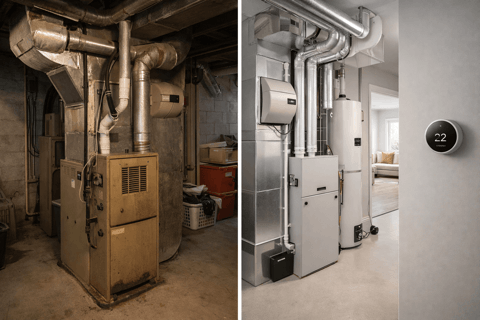
We looked at a Toronto house where finishes were clean and updated, but HVAC was dated and uneven by zone. Three options came up quickly: basic furnace replacement, full heat pump shift, or hybrid. Furnace-only solved immediate reliability with lower upfront spend. Full heat pump looked efficient on paper but needed more electrical and controls work. Hybrid landed as the practical middle path: higher initial cost, better winter reliability, and better year-round efficiency than furnace-only.
That decision was not about marketing claims. It was about what the house could support without creating first-year budget shock.
Humidifier: is it worth it in Toronto?
In Toronto winters, dry air is not just comfort. It can affect perceived warmth, sleep quality, and how hard your system runs. Whole-home humidifier installs often cost $400-$1,800 depending on type and integration.
- Bypass: lower cost, simpler install, works with furnace airflow.
- Flow-through: lower maintenance than drum styles, common upgrade path.
- Steam: highest control and output, usually highest install cost.
Air filters: what actually matters
For most homes, filter strategy matters more than “premium” marketing labels. MERV ratings determine capture performance and airflow impact. In many GTA homes, MERV 11-13 is the practical target when the system can support it. HEPA-level filtration is powerful but often needs dedicated design adjustments and should not be assumed as a drop-in swap.
Which HVAC brands are trusted in Canada?
Commonly trusted names include Mitsubishi, Lennox, Carrier, Trane, Napoleon, and Goodman. Brand matters. Installer quality matters more. Bad sizing or poor commissioning can make a premium system perform worse than a mid-tier system installed correctly.
Which HVAC should you choose? Decision table
| Home scenario | Usually strongest option | Why |
|---|---|---|
| Older house with uncertain envelope | Furnace or hybrid | Better winter reliability while you phase envelope/electrical upgrades |
| Newer build with good insulation and electrical readiness | Heat pump | Efficiency gains are easier to realize |
| Basement comfort issue with no clean duct path | Ductless mini-split | Targeted zone solution without major duct reconstruction |
| Large house with comfort swings across seasons | Hybrid + humidifier | Balanced seasonal control and better comfort stability |
What can go wrong
- Oversizing equipment, which hurts comfort and efficiency.
- Ignoring duct condition and static pressure before equipment choice.
- Choosing by rebate headlines while missing total scope cost.
- Underestimating integration work (electrical panel, controls, venting).
How I would approach this now
I would treat HVAC as a systems decision, not a product decision. First validate the house constraints. Then model two viable options, including full installed scope and first-year operating impact. Then choose the path that stays reliable in winter and keeps cash flow predictable.
FAQ
What is the best HVAC system in Toronto?
There is no single best option for every home. In Toronto, the best system is the one properly sized for your house condition, winter performance needs, and budget horizon.
Is a heat pump worth it in Canada?
Often yes, especially in homes with good insulation and electrical readiness. In older homes, a hybrid system can be more practical because it balances efficiency and deep-winter reliability.
Do I need a humidifier in Toronto?
Many homeowners benefit from one because winter air is dry. Installed cost is commonly $400-$1,800 depending on bypass, flow-through, or steam setup.
How much does HVAC cost in GTA?
Furnace replacements often run $3,500-$8,000. Heat pump installs are commonly $6,000-$15,000+. Full HVAC system upgrades typically land around $8,500-$20,000+ depending on scope.
Use our HVAC cost calculator for Toronto/GTA first, then if needed get matched with local contractors. For related planning, check real ownership cost planning in GTA, inspection red flags, roof replacement cost context, and basement renovation planning.
Where These Numbers Come From
We use Toronto/GTA contractor pricing patterns, local housing-stock observations, and scenario-based maintenance modeling. These are planning ranges only, not fixed quotes.
Confidence Level
Medium confidence. Confidence is lower when scope depends on hidden conditions (for example behind-wall electrical, moisture, or structural corrections) and higher when scope is cosmetic with clear access and stable systems.
What Can Go Wrong
- Hidden moisture, mold, or drainage issues discovered after opening finishes.
- Electrical and plumbing upgrades that expand from partial to full-scope corrections.
- Structural or code-compliance issues that add permit and timeline pressure.
- Contractor sequencing gaps that create avoidable rework and added cost.
When This Estimate Breaks
Rough planning ranges break down when property condition is unknown, prior work is undocumented, or major scope changes happen mid-project. For high-risk properties, use these ranges only as a first-pass budget screen and validate with inspection plus scoped quotes before committing.
Practical reference: use the Toronto renovation cost checklist for a full renovation budget breakdown before you finalize your offer assumptions.
Section 1 - Context
This page solves a buyer-side decision problem: whether this issue should change your offer strategy, first-year budget plan, or property selection in Toronto/GTA.
Section 2 - Cost Range
Use the cost and timing ranges already presented in this guide. Keep the same numbers, then test best/base/worst-case scenarios before committing.
Section 3 - Interpretation
The same number can mean very different risk depending on scope depth. Lower ranges often map to targeted corrective work; upper ranges usually indicate system-level overlap or sequencing friction.
Section 4 - Risk & Variability
- Scope drift after inspection or opening walls.
- Permit/trade dependencies that extend timeline and labor cost.
- Material and contractor availability across GTA seasons.
Section 5 - What Can Go Wrong
- Hidden moisture or drainage issues.
- Electrical/plumbing corrections cascading into finish rework.
- Under-scoped contractor proposals that omit necessary items.
Section 6 - Confidence
Confidence: Medium
Confidence is medium because visible condition and true technical condition often diverge until inspection and scoped validation.
Section 7 - Decision Frame
When this is manageable: Manageable when scope is known, contingency is budgeted, and sequencing is realistic.
When to walk away: Walk away when total correction risk and first-year cash-flow pressure remove the expected deal advantage.
Section 8 - Next Step
Estimate your scenario first - then decide next step.
Planning Notes
Risks
Scope can expand quickly when hidden system conditions differ from visible finishes.
Trade-Offs
Lower initial purchase price may be offset by higher first-year correction spend if risk is under-scoped.
When Not to Do It
Do not proceed when projected correction range plus contingency removes your affordability margin.