
GTA Buyer Guide
Home Renovation Cost in Toronto (Practical 2026 Guide)
Step 3: convert post-purchase repair chaos into a phased decision system.
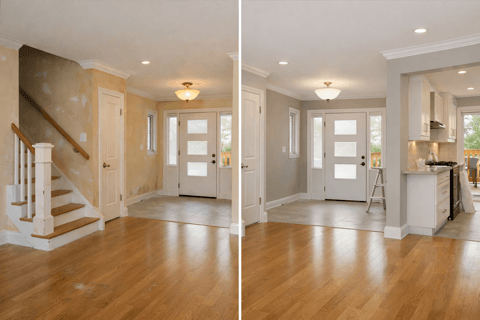
Home Renovation Cost in Toronto (Practical 2026 Guide)
Post-purchase repair-and-refresh scope in Toronto/GTA commonly lands between $15,000 and $120,000+, and most budget failures come from sequencing mistakes rather than single big-ticket items.
User state context
This step is for owners who already closed and need a system to prioritize what to do first without burning budget on low-impact work.
You are at step 3 of 8 in the post-purchase decision journey.
Decision shortcut
Yes if:
- you can classify issues by compounding risk and timeline
- you are willing to phase execution by dependency order
No if:
- you are trying to do all projects in first 90 days
- you are choosing upgrades by aesthetics instead of risk profile
Priority + timing
Priority:
- High: safety, active water/moisture, failing core systems
- Medium: efficiency and function improvements
- Optional: cosmetic and style enhancements
- Waste: premium visuals while hidden risks remain open
Timing:
- Immediate (0-3 months): stabilize high-risk categories
- Within 1 year: complete reliability and utility stack
- Later: optional aesthetic optimization
Costs + ROI
- Light refresh + selective fixes: $15,000-$35,000
- Mixed systems + finishes: $35,000-$85,000
- Heavy first-year correction: $85,000-$150,000+
ROI comes from failure-risk reduction and reduced rework, not from front-loading visible upgrades.
Step-by-step / options
- Build issue inventory by system category.
- Assign urgency and compounding-risk score.
- Estimate low/likely/high cost for each category.
- Schedule execution by dependency to avoid rework.
- Re-evaluate quarterly.
What can go wrong
- Permit/code items discovered late
- Trade overlap creating duplicate labor
- Budget exhaustion from early optional upgrades
Real example (GTA)
A GTA townhouse started with a $25,000 refresh assumption. After electrical and plumbing corrections were scoped properly, likely year-one spend moved to ~$42,000. Budget remained stable because optional finish work was delayed.
How I would approach this now
I would run this as a living operating plan: risk closure first, utility second, style last.
Related steps
- Real Cost of Owning a House in GTA (core pillar)
- Basement finishing step
- What to fix first after purchase
- Hidden costs after buying
If you want help turning this into a practical action plan for your property, use Get Matched.
Where These Numbers Come From
We use Toronto/GTA contractor pricing patterns, local housing-stock observations, and scenario-based maintenance modeling. These are planning ranges only, not fixed quotes.
Confidence Level
Medium confidence. Confidence is lower when scope depends on hidden conditions (for example behind-wall electrical, moisture, or structural corrections) and higher when scope is cosmetic with clear access and stable systems.
What Can Go Wrong
- Hidden moisture, mold, or drainage issues discovered after opening finishes.
- Electrical and plumbing upgrades that expand from partial to full-scope corrections.
- Structural or code-compliance issues that add permit and timeline pressure.
- Contractor sequencing gaps that create avoidable rework and added cost.
When This Estimate Breaks
Rough planning ranges break down when property condition is unknown, prior work is undocumented, or major scope changes happen mid-project. For high-risk properties, use these ranges only as a first-pass budget screen and validate with inspection plus scoped quotes before committing.
Practical reference: use the Toronto renovation cost checklist for a full renovation budget breakdown before you finalize your offer assumptions.
Section 1 - Context
This page solves a buyer-side decision problem: whether this issue should change your offer strategy, first-year budget plan, or property selection in Toronto/GTA.
Section 2 - Cost Range
Use the cost and timing ranges already presented in this guide. Keep the same numbers, then test best/base/worst-case scenarios before committing.
Section 3 - Interpretation
The same number can mean very different risk depending on scope depth. Lower ranges often map to targeted corrective work; upper ranges usually indicate system-level overlap or sequencing friction.
Section 4 - Risk & Variability
- Scope drift after inspection or opening walls.
- Permit/trade dependencies that extend timeline and labor cost.
- Material and contractor availability across GTA seasons.
Section 5 - What Can Go Wrong
- Hidden moisture or drainage issues.
- Electrical/plumbing corrections cascading into finish rework.
- Under-scoped contractor proposals that omit necessary items.
Section 6 - Confidence
Confidence: Medium
Confidence is medium because visible condition and true technical condition often diverge until inspection and scoped validation.
Section 7 - Decision Frame
When this is manageable: Manageable when scope is known, contingency is budgeted, and sequencing is realistic.
When to walk away: Walk away when total correction risk and first-year cash-flow pressure remove the expected deal advantage.
Section 8 - Next Step
Estimate your scenario first - then decide next step.
Planning Notes
Risks
Scope can expand quickly when hidden system conditions differ from visible finishes.
Trade-Offs
Lower initial purchase price may be offset by higher first-year correction spend if risk is under-scoped.
When Not to Do It
Do not proceed when projected correction range plus contingency removes your affordability margin.