
GTA Buyer Guide
Buying a Well-Maintained Older Home (80s–90s): Safe or a Hidden Budget Risk?
A practical Toronto/GTA decision guide for homes with older but working systems: how to judge timing risk, replacement clustering, and quiet ongoing energy costs.
Short Answer
A well-maintained older home can be a safe buy in Toronto/GTA, but it is often a timing-risk house rather than a renovation house. If core systems and appliances are from the 80s-90s, replacements can land unpredictably and sometimes cluster in the first 1-3 years.
Why This Question Came Up
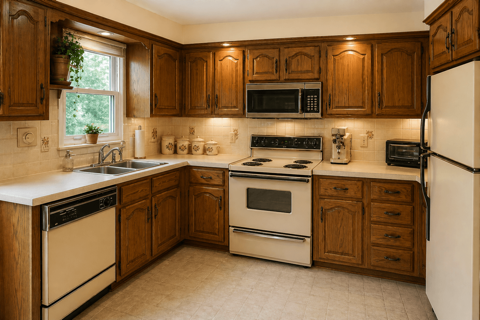
I walked through a home that looked almost untouched in a good way. It felt like a time capsule: solid wood cabinetry, doors and hardware still aligned, no squeaks, everything operating, and visible maintenance done consistently over time.
What stood out was age, not neglect. Rotary dimmers were still installed, the microwave was from the 80s, the electric stove was dated 1982, dishwasher 1987, washer/dryer around 1990-92, and the jacuzzi tub and light fixtures were from the same era. Even the garage door opener from the 80s was still functioning. HVAC was newer (roughly 10 years old), which reduced one major near-term risk.
So the issue was not “broken house.” The issue was: how much timing uncertainty can your first-year budget absorb?
Core Insight: This Is a Timing Problem
This is not a classic fixer-upper pattern. In these homes, condition is good, but failure timing is uncertain. You can have years of stable operation, then two or three items fail in a short window.
That uncertainty is the budget risk. You may not control when replacement spending shows up.
Quick Decision
Manageable:
- everything works
- no visible issues
- budget buffer exists
Risky:
- multiple systems near end-of-life
- electrical may be outdated
- no budget flexibility
Not worth it:
- budget already stretched
- multiple replacements expected within 1-2 years
What Actually Happens in Practice
In most cases, failure is staggered. A fridge goes first, then maybe dishwasher a year later, then stove or laundry after that. But clustering happens too: one failure can expose another weak point.
- fridge fails in year 1
- dishwasher in year 2
- stove anytime depending on element/control condition
When appliances are older but still in good state, the trap is psychological: buyers interpret “working now” as “low risk soon.” Those are different statements.
Older Appliances in Good State: What That Really Means
“Good state” usually means clean operation, acceptable noise, no immediate leaks/errors, and stable day-to-day use. It does not reset age-related wear inside motors, boards, seals, and controls.
- an 80s/90s unit can be reliable today and still fail without much warning
- parts availability can be limited for some models
- repair costs can become less rational compared with replacement
So good condition lowers immediate panic, but it does not remove timing uncertainty.
Hidden Ongoing Cost: Energy Behavior
Older appliances can stay functional while using noticeably more electricity. This is usually a quiet cost, not a dramatic one, but it compounds monthly.
- higher hydro bills over time
- longer operating cycles
- less efficient heating/cooling behavior around legacy equipment mixes
Typical pattern only: an older fridge might add roughly $5-$15/month, and an older dishwasher around $3-$10/month. The point is not exact math. The point is persistent baseline overhead.
Cost Reality
For this profile, replacement spending often lands in a rough $3k-$8k total over time, depending on what fails and when. The bigger issue is clustering: two or three replacements in one short period can pressure cash flow more than the total number itself.
When This Is Fine
- price already reflects age and replacement reality
- maintenance history is consistent and believable
- you keep a real cash buffer after closing
- no immediate safety or system failures are visible
When This Becomes a Problem
- post-closing budget is tight with little reserve
- multiple failures arrive in the same 12-24 month window
- electrical constraints increase replacement complexity
- early failures force rushed decisions at bad timing
Decision Framework
- Assume staggered failures, not perfect continuity.
- Plan a practical $3k-$8k replacement buffer.
- Accept that timing is uncertain even when condition looks good.
- Decide if this uncertainty fits your first-year budget model.
Related Planning Links
If you're already thinking about replacing everything, review the outdated kitchen cost and risk breakdown. For mechanical-system planning, check old heating system cost context in GTA homes. For bigger budget sequencing, use the Toronto & GTA renovation planning guide and compare assumptions with the Toronto renovation cost checklist.
How I Would Approach This Now
I would treat this home type as “low visible risk, medium timing risk.” I would not discount it automatically. I would price it with a replacement buffer, protect first-year liquidity, and avoid assuming old-but-working systems will fail one at a time on a convenient schedule.
Optional next step: run the fix-vs-buy calculator with a conservative first-year replacement scenario and see whether the deal still works without stress.
Where These Numbers Come From
We use Toronto/GTA contractor pricing patterns, local housing-stock observations, and scenario-based maintenance modeling. These are planning ranges only, not fixed quotes.
Confidence Level
Medium confidence. Confidence is lower when scope depends on hidden conditions (for example behind-wall electrical, moisture, or structural corrections) and higher when scope is cosmetic with clear access and stable systems.
What Can Go Wrong
- Hidden moisture, mold, or drainage issues discovered after opening finishes.
- Electrical and plumbing upgrades that expand from partial to full-scope corrections.
- Structural or code-compliance issues that add permit and timeline pressure.
- Contractor sequencing gaps that create avoidable rework and added cost.
When This Estimate Breaks
Rough planning ranges break down when property condition is unknown, prior work is undocumented, or major scope changes happen mid-project. For high-risk properties, use these ranges only as a first-pass budget screen and validate with inspection plus scoped quotes before committing.
Practical reference: use the Toronto renovation cost checklist for a full renovation budget breakdown before you finalize your offer assumptions.
Section 1 - Context
This page solves a buyer-side decision problem: whether this issue should change your offer strategy, first-year budget plan, or property selection in Toronto/GTA.
Section 2 - Cost Range
Use the cost and timing ranges already presented in this guide. Keep the same numbers, then test best/base/worst-case scenarios before committing.
Section 3 - Interpretation
The same number can mean very different risk depending on scope depth. Lower ranges often map to targeted corrective work; upper ranges usually indicate system-level overlap or sequencing friction.
Section 4 - Risk & Variability
- Scope drift after inspection or opening walls.
- Permit/trade dependencies that extend timeline and labor cost.
- Material and contractor availability across GTA seasons.
Section 5 - What Can Go Wrong
- Hidden moisture or drainage issues.
- Electrical/plumbing corrections cascading into finish rework.
- Under-scoped contractor proposals that omit necessary items.
Section 6 - Confidence
Confidence: Medium
Confidence is medium because visible condition and true technical condition often diverge until inspection and scoped validation.
Section 7 - Decision Frame
When this is manageable: Manageable when scope is known, contingency is budgeted, and sequencing is realistic.
When to walk away: Walk away when total correction risk and first-year cash-flow pressure remove the expected deal advantage.
Section 8 - Next Step
Estimate your scenario first - then decide next step.
Planning Notes
Risks
Scope can expand quickly when hidden system conditions differ from visible finishes.
Trade-Offs
Lower initial purchase price may be offset by higher first-year correction spend if risk is under-scoped.
When Not to Do It
Do not proceed when projected correction range plus contingency removes your affordability margin.